

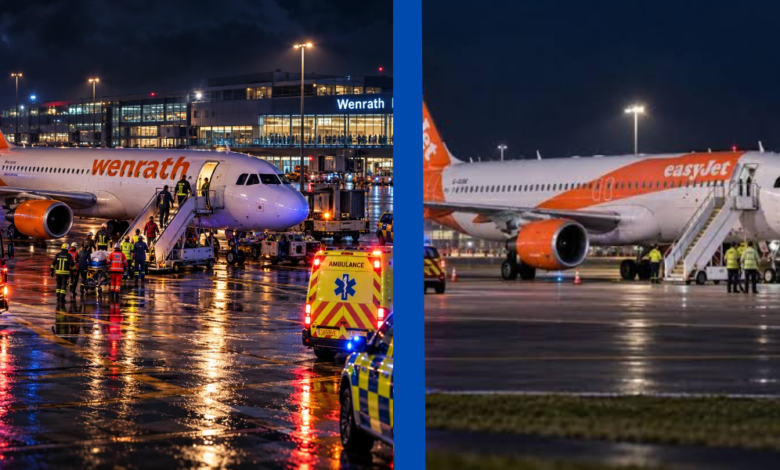
The EasyJet Flight U2238 emergency landing Newcastle incident drew attention after an easyJet aircraft travelling from Copenhagen to Manchester made an unscheduled stop at Newcastle International Airport. The diversion took place on 27 October 2025 after a passenger onboard required urgent medical attention. The aircraft landed safely, medical teams assisted the passenger, and the flight later continued to Manchester.
What Happened on the Flight?
The easyJet service departed Copenhagen and was travelling towards Manchester when a medical situation developed onboard. A passenger reportedly needed urgent assistance, prompting the crew to change the flight plan. Instead of continuing directly to Manchester, the pilots diverted to Newcastle, where emergency medical services were available to meet the aircraft after landing.
The flight involved was officially identified as EZY2238, also shown as U2 2238 or U22238. It is frequently searched online as U2238, although that shortened number can refer to a different easyJet service.
Why the Flight Diverted
The diversion was caused by a passenger medical emergency, not by a confirmed fault with the aircraft. easyJet stated that a customer onboard required urgent medical attention and that the passenger was met by medical services after the aircraft arrived in Newcastle.
Medical diversions are made when continuing to the original destination could delay important treatment. Passenger wellbeing can take priority over the planned route and arrival time.
Why Newcastle Was Chosen
Newcastle International Airport provided a suitable place for the aircraft to land while travelling towards northern England. Pilots can consider distance, runway availability, weather, fuel, airport facilities and access to medical assistance when deciding where to divert.
The airline did not publicly explain every factor behind the choice of Newcastle, so it is best to avoid speculation about one specific reason.
Flight Number Confusion
One of the most confusing parts of the incident is the way the flight number appears online. The Copenhagen-to-Manchester service was U2 2238, which can be written as U22238. Its aviation identifier was EZY2238.
Many people search for EasyJet Flight U2238 emergency landing Newcastle, but U2238 technically combines the U2 airline code with flight number 238. For accuracy, U22238 or EZY2238 are better identifiers for this incident.
What Squawk 7700 Means
Flight-tracking reports indicated that the aircraft transmitted Squawk 7700 before landing in Newcastle. This is a general emergency code used by aircraft to tell air traffic controllers that an urgent situation is taking place.
A 7700 code does not automatically mean there is an engine failure or serious aircraft problem. It may also be used during medical emergencies, as happened in this case.
What Passengers Experienced
Passengers expecting a direct Copenhagen-to-Manchester journey instead experienced an unexpected diversion and additional time on the ground. The route changed while the crew dealt with the passenger’s medical situation and prepared for a landing at Newcastle.
There are no widely verified first-hand accounts describing panic or dramatic scenes inside this particular flight. Claims about passenger reactions should therefore not be exaggerated without reliable evidence.
Landing at Newcastle
The aircraft landed safely at Newcastle International Airport, where medical personnel were ready to assist the passenger. Reports placed the landing at around 10:52 pm UK time.
After arrival, the affected passenger was transferred into the care of medical services. The airline later confirmed that the flight continued once the necessary response had been completed.
Was There a Mechanical Problem?
There is no reliable evidence that the aircraft suffered an engine failure, fire, structural issue or another major technical problem. The airline specifically linked the diversion to a passenger requiring urgent medical attention.
This distinction is important because the phrase “emergency landing” can sound more serious than the actual circumstances. In this case, medical diversion is a more accurate description.
What Happened After Landing?
Once the passenger had received assistance and the aircraft was cleared to continue, the easyJet flight departed Newcastle and continued to its original destination in Manchester.
The stop added extra time to the journey, but the remaining passengers were not left stranded in Newcastle. Their route effectively became Copenhagen to Newcastle to Manchester rather than the direct journey they had originally expected.
The Aircraft Involved
Aviation reports identified the aircraft as an Airbus A320-214, registration G-EZPB. The Airbus A320 is widely used by easyJet for short and medium-distance European services.
The aircraft was able to continue to Manchester after the medical situation was handled, supporting reports that the diversion was related to passenger welfare rather than a disabling aircraft fault.
How Medical Emergencies Are Handled
Cabin crew receive first-aid training and aircraft carry medical equipment for onboard emergencies. If a passenger becomes seriously ill, crew members may also ask whether a doctor, nurse or other qualified medical professional is travelling onboard.
Pilots can communicate with airline operations and medical support on the ground before deciding whether to continue the flight or divert to another suitable airport.
Why Flights Make Medical Diversions
Medical diversions are relatively uncommon, but they are an important part of aviation safety. Conditions such as serious chest pain, breathing difficulties, loss of consciousness or suspected stroke can require faster access to hospital treatment.
The decision to divert may inconvenience passengers, but the purpose is to reduce delays in medical care and protect the health of the person involved.
Was the Aircraft in Danger?
Nothing in the available reporting suggests that the aircraft itself was in immediate danger. The Airbus remained operational, landed safely and later continued its journey.
The emergency declaration reflected the seriousness of the passenger’s medical condition rather than evidence of an aircraft malfunction. This is why readers should be cautious about assuming every emergency landing involves a mechanical failure.
Why the Incident Drew Attention
The story gained attention partly because public flight-tracking services can quickly highlight aircraft using emergency codes. A Copenhagen-to-Manchester flight suddenly diverting towards Newcastle naturally attracted interest from people following its route.
The confusing flight numbers also contributed to searches, with U2238, U22238 and EZY2238 appearing in different discussions about the same incident.
Final Thoughts
The EasyJet Flight U2238 emergency landing Newcastle incident was a medical diversion involving an easyJet service travelling from Copenhagen to Manchester. A passenger required urgent medical attention, leading the pilots to land at Newcastle International Airport.
Medical services met the passenger after arrival, and the aircraft later continued safely to Manchester. The incident shows how airlines can quickly change a flight plan when passenger health becomes more important than maintaining the original schedule.
Must Read: Kathy Warden and Simone Biles: Age, Career, Family and Success
FAQs
Why did EasyJet Flight U2238 make an emergency landing in Newcastle?
The flight diverted to Newcastle International Airport because a passenger onboard required urgent medical attention. Medical teams were ready to assist when the aircraft landed.
Was there a mechanical problem with the easyJet aircraft?
No major mechanical fault was publicly reported. easyJet confirmed that the diversion happened because of a passenger medical emergency, rather than an engine or aircraft problem.
Did EasyJet Flight U2238 eventually reach Manchester?
Yes. After the affected passenger was handed over to medical services in Newcastle, the aircraft later departed and continued to its original destination at Manchester Airport.
What does Squawk 7700 mean?
Squawk 7700 is a general aviation emergency code. Pilots use it to alert air traffic control that an urgent situation exists, although the code itself does not explain the exact type of emergency.
Was anyone injured during the Newcastle emergency landing?
No wider passenger or crew injuries were reported. One passenger required urgent medical attention, but detailed information about that person’s condition was not publicly confirmed.
